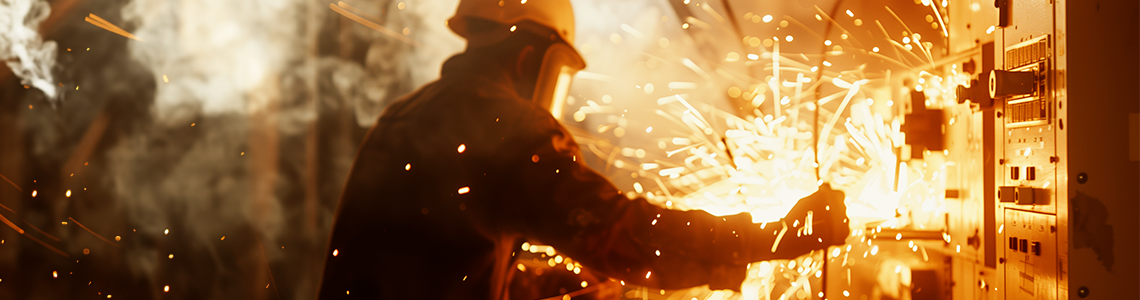
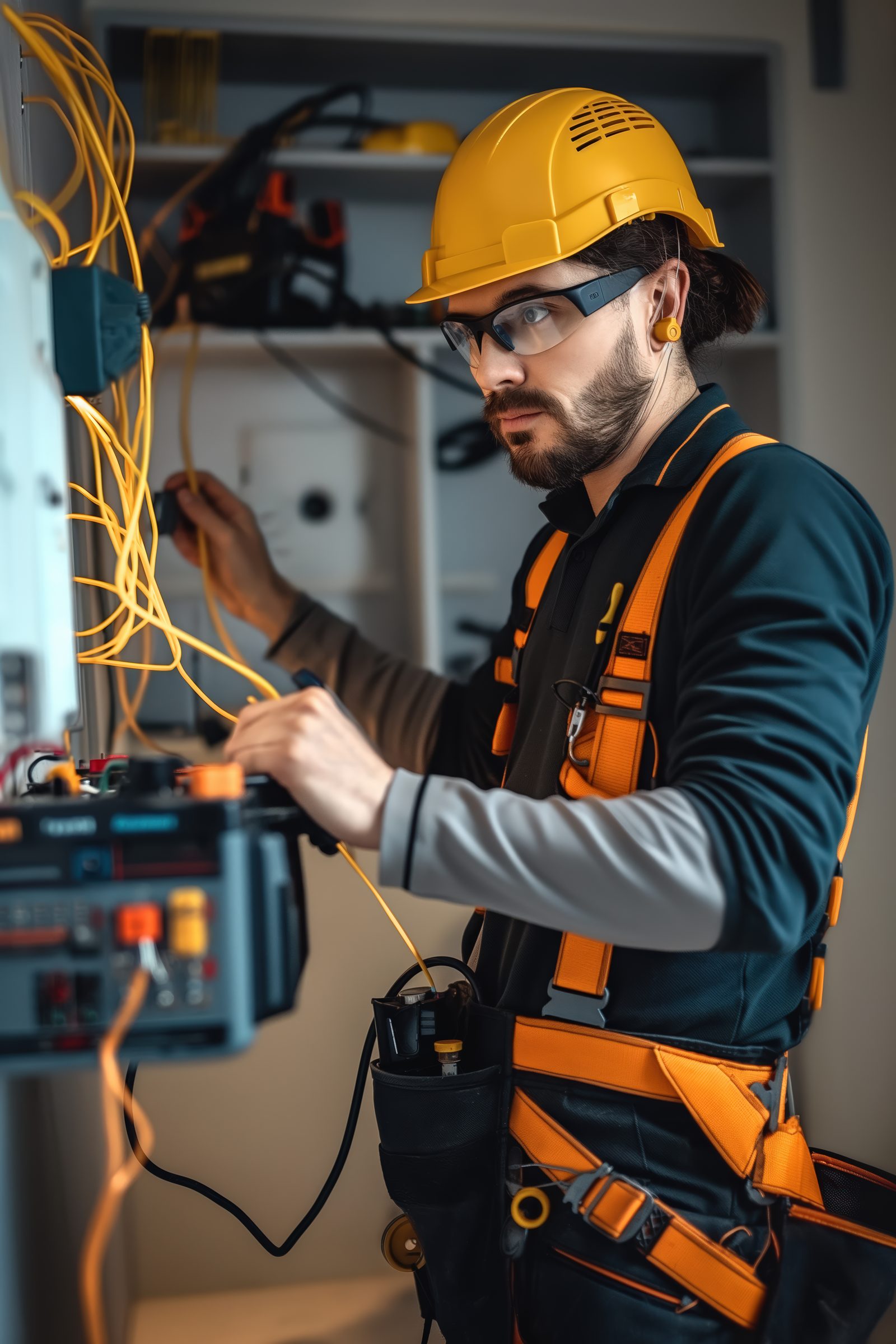
A breaker trip setting changed during a project can quietly invalidate an arc flash label. Here's how a Management of Change process — and NFPA 70E — are supposed to close that gap before an electrician gets hurt.
Every session is led by a working safety professional with 30+ years in the field — delivered onsite or virtual instructor-led, built around your equipment and your hazards. Interactive, scenario-based, and priced to scale across your whole team.
Among the teams we’ve trained
The 2027 edition took effect May 6, 2026 — with a mandatory second-person requirement for energized work, new verification testing rules, contact thermal hazard PPE, and battery & solar provisions. Get every change explained, plus a 90-day implementation roadmap and gap-assessment checklist.
Our training doesn't just satisfy a compliance checkbox — it changes behavior, reduces incidents, and builds a culture of electrical safety that lasts.
Every program is custom-built for your industry, led live by a CSP-certified instructor, and designed to drive real behavioral change — not just pass a test.
We travel to your facility and deliver live, hands-on NFPA 70E training built around your equipment, processes, and workforce — never a one-size-fits-all script. Groups capped at 20.
Our virtual sessions deliver the same expert instruction as onsite — live, interactive, and never pre-recorded. Groups capped at 20 to ensure real engagement with the instructor.
Managing compliance across multiple locations? We build a standardized NFPA 70E program scaled to your entire organization — consistent, fully documented, and audit-ready.
We didn’t set out to build a training company. We’re career safety professionals and OSHA-credentialed instructors who spent decades on plant floors, in data centers, and on job sites before we ever led a class. Teaching NFPA 70E is how we now pass on what those years taught us.
Each instructor brings a minimum of 30 years of hands-on industry experience, a CSP credential, and OSHA Authorized Outreach status. Sessions are built around scenario-based group exercises and the equipment your crew actually runs — not a generic slide deck — and every course reflects the current NFPA 70E 2027 standard. We deliver onsite, virtual instructor-led, and hybrid multi-site formats, priced to stay cost-effective as your team grows.
Our instructors have run NFPA 70E sessions in data centers, hospitals, manufacturing plants, utilities, cement plants, and active construction sites — each program scoped to that industry’s actual hazards.
Zero room for error. We train crews on the hazards specific to high-density power — switchgear, PDUs, and live equipment — without pulling systems offline to do it.
Data center training →
Plants, utilities, hospitals, and maintenance crews get a program built to OSHA 29 CFR 1910.332/333 and tailored to the electrical hazards actually present on their floor.
General industry training →
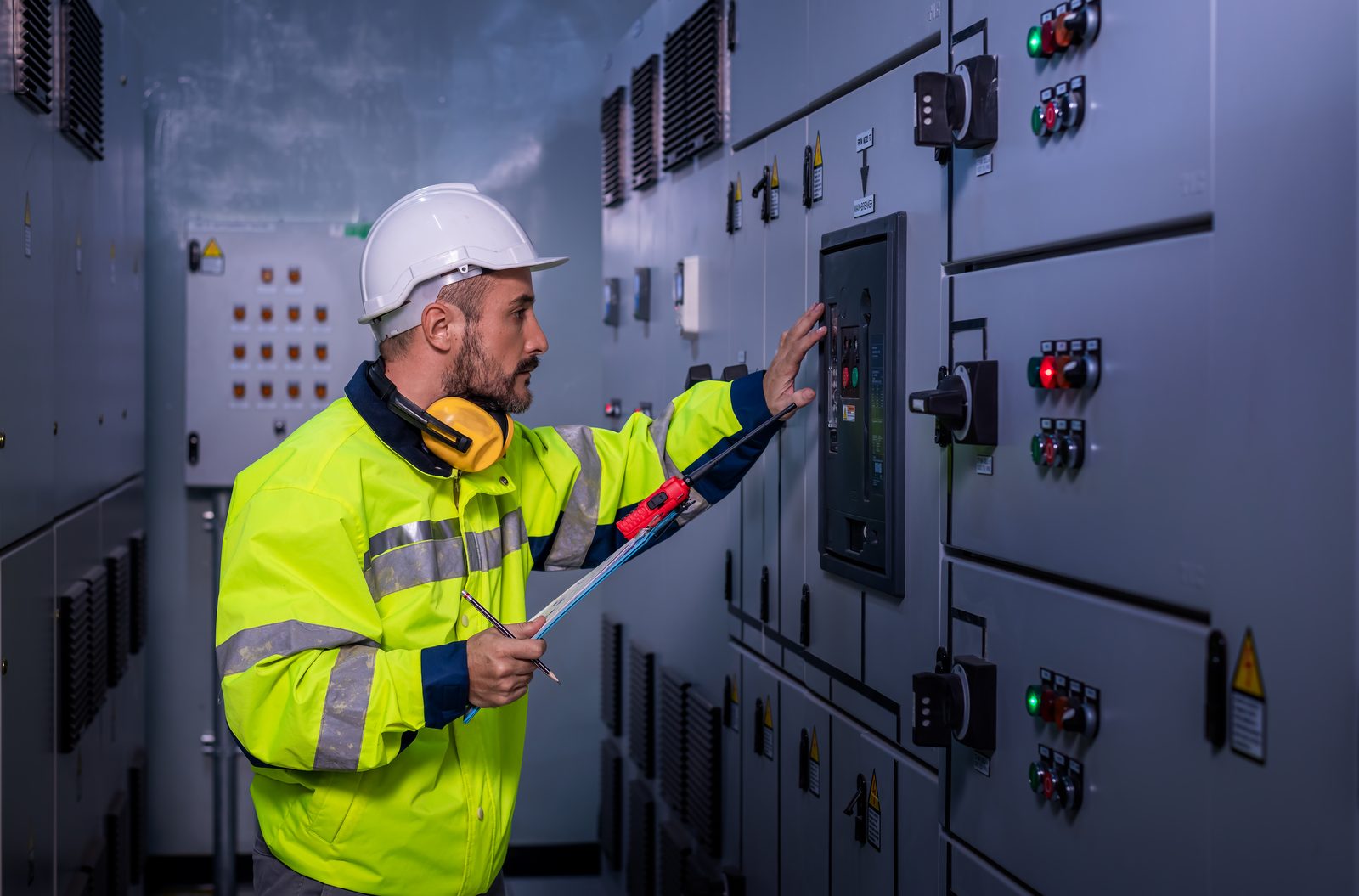
Temporary power, overhead lines, and energized systems create risks unique to active job sites. We cover Subpart K requirements for qualified and unqualified crew alike.
Construction training →We don’t teach forty different safety topics — NFPA 70E is the only subject we deliver, and it shows in the outcomes.
We start every program by learning your equipment, your process, and your hazards before a single slide gets written. The scenarios and case studies your team works through come from your world — never a canned deck pulled off a shelf.
Every instructor holds a CSP credential and OSHA Authorized Outreach status, backed by 30+ years in the field. You’re learning from people who’ve done the job, not contract presenters reciting someone else’s slides.
Our sessions average a 9.55/10 rating, an 85%+ Net Promoter Score, and a 59% perfect-score rate on post-training assessments — proof that training built around real job tasks sticks better than a generic course.
There’s no franchise territory or regional middleman standing between you and an instructor. We travel anywhere in the U.S. and typically mobilize within two to three weeks of booking, built around your timeline.
Every format — onsite or virtual instructor-led over Zoom or Teams — uses the same instructor, curriculum, and certification. We don’t offer a pre-recorded option; every session is live, interactive, and more cost-effective than flying a team to a classroom.
Each session generates individual arc flash certifications plus a full documentation package mapped to OSHA 29 CFR 1910 Subpart S and 1926 Subpart K, so your compliance records are organized and ready before an auditor ever asks.
No lengthy sales process — just a short conversation and a program built around your operation.
Call (855) 999-0-ARC or send a quote request — most inquiries get a same-day response.
We walk through your site, workforce, and compliance gaps so the course fits your actual equipment and hazards.
Choose onsite, virtual instructor-led, or a hybrid across multiple sites — same instructor, same standard, either way.
Every participant walks away with a completion certificate, and you get the documentation your compliance file needs.
"One of the best instructors I've ever come across. The instructor cares tremendously about what is being taught. I learned a lot. Would recommend 10/10 times."
"Our instructor was great! The material was well presented, very engaging, and full of teachable moments drawn from real-world experience."
"Very knowledgeable about Electrical Safety. The instructor connected every topic directly to real situations we deal with on the job. Thank you!"
"Very great instructor — very interactive, knew how to ask the right questions, and explained whatever we didn't understand in the best way possible. Thank you!"
"The instructor took great pride in this training and made sure it was very engaging and easy to follow. Would recommend to anyone unfamiliar with NFPA 70E."
"Our trainer was extremely kind and engaging. An outstanding instructor who made a complex subject approachable and immediately applicable."
A breaker trip setting changed during a project can quietly invalidate an arc flash label. Here's how a Management of Change process — and NFPA 70E — are supposed to close that gap before an electrician gets hurt.
Standard lockout/tagout assumes you can fully de-energize a circuit. Solar PV systems break that assumption — the modules keep producing voltage as long as light hits them. Here's what qualified workers need to know.
Answers to the questions safety managers and EHS teams ask us most often.